Crackling and Capers: Stocking a British Kitchen From Foreign Shelves
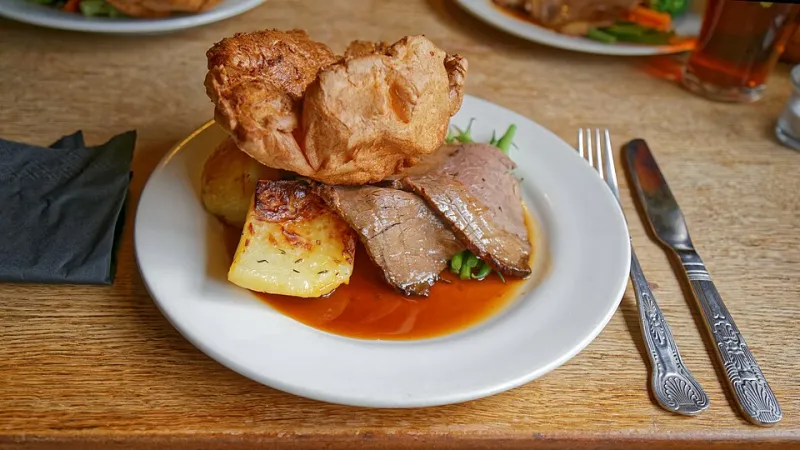
Photo: Acabashi, CC BY-SA 4.0, via Wikimedia Commons
Few habits travel as stubbornly as the Sunday roast. It arrives in the new country quietly, disguised as a question: can we still do this here? The answer is almost always yes, but not by reproducing a British supermarket shop. The roast is a useful test case precisely because it touches everything a new kitchen routine depends on — meat, flour, fat, vegetables, oven behaviour, freezer space and the weekly budget. Treated as a practical exercise rather than a matter of sentiment, it teaches you more about food shopping abroad than a dozen lists of expat shops.
Begin at the Butcher's Counter, Not in the Freezer
The joint is the first decision, and it is best made face to face. Local butchers in most of southern Europe, France and parts of rural Ireland and the Low Countries will prepare a cut to order if asked clearly and early. Go in midweek, when the counter is quiet, and take a small card with the cut written in the local language. For pork, ask for the skin left on and scored; for beef, a boned rib or topside; for lamb, a shoulder that will stand long, slow cooking. Explain that you want it tied, and ask whether it can be collected on Saturday morning.
Language matters less than precision. Point to the joint in the display, state the weight in kilos, and confirm the price per kilo before it is wrapped. British cooks often ask for a larger joint than continental butchers expect, so be explicit about feeding six or eight people. Take an insulated bag and go straight home; in warm weather the cold chain is not a detail to be improvised. If the shop offers vacuum packing, accept it — it buys you a day or two of flexibility.
Translating the Store Cupboard
Very little in a British cupboard is irreplaceable. Plain flour exists almost everywhere, though protein levels vary; for Yorkshire pudding batter, a flour sold for pizza or bread often gives a better rise than a soft local cake flour. Self-raising flour can be approximated with about two level teaspoons of baking powder to 150g of plain flour, though the result is not identical. Suet can be replaced in many recipes with chilled, grated butter or a vegetable shortening. Golden syrup is harder: honey or light treacle will work in some puddings, but not all, and a tin from an import shop is often the cheaper answer once failures are counted.
Gravy is where new cooks tend to overbuy. Roast juices, a little flour or cornflour, and a stock made from local bones or a good shop-bought stock will do the work of granules. Mustard, horseradish and mint sauce can be made from local ingredients; Dijon mustard gives background heat without the sharpness of English mustard. Stuffing is simply breadcrumbs, onion, herbs and sausage meat, and local sausage meat is often excellent, though it pays to taste it first for seasoning. Bread sauce can be made with local milk, cloves and a stale roll.
Import Shops and the True Price of Nostalgia
Every expat region has its British aisle, its online importer or its van that visits once a month. These are useful, not shameful, but they reward discipline. Compare price per 100g rather than price per packet, and include delivery charges and minimum order values in the calculation. A familiar brand may cost two or three times its UK price once shipping is counted, and heavy liquids — squash, vinegar, ale — are rarely worth the freight.
Customs rules for parcels and personal imports deserve checking before a large order is placed, particularly since the post-Brexit arrangements settled. Shelf life is the other quiet cost. A cupboard filled with twelve tins of a sauce you use twice a year is money sitting still. Buy the small size first, cook with it, and only then decide whether it earns permanent shelf space.
A Freezer That Earns Its Space
A roast for six is a roast for two plus four portions of future dinners, and the freezer is where the weekly budget is quietly won. Slice leftover meat and freeze it in gravy, in flat bags that thaw quickly and stack neatly. Cooked Yorkshire puddings freeze well and reheat in a hot oven in minutes. Raw meat should be frozen on the day of purchase, or the day after if kept properly chilled, and labelled with the date and contents.
Check that the freezer runs at -18°C or colder, and keep a cheap thermometer inside it. In regions where power cuts are more than a rumour, know the rule of thumb: a full freezer will hold its temperature for around 24 hours if the door stays shut, a half-full one for considerably less. Defrost meat overnight in the fridge, never on a warm worktop, and cook poultry until the juices run clear and the thickest part reaches 75°C.
Design a Weekly Rhythm
A food routine is a timetable. Many successful expat kitchens settle into a pattern: market on Saturday for vegetables and cheese, butcher's order collected on Friday or Saturday, supermarket on a quiet weekday for dry goods and dairy, and perhaps a monthly import order for the few things that cannot be substituted. Keep a small notebook of prices for the first six months. It sounds old-fashioned, but it is the fastest way to learn which local shop is expensive, which market stall is worth the early start, and how far the weekly budget actually stretches.
Use the local larder where it improves the meal. Roast potatoes cook beautifully in olive oil, duck fat or a local dripping; seasonal vegetables from the market often need nothing more than salt and a hot oven. Ovens vary, and fan settings can run hot: reduce a conventional recipe by around 20°C for a fan oven, and use a meat thermometer until you trust the appliance.
A Table Between Two Places
The first Sunday roast abroad is rarely perfect. The crackling may fight back, the flour may behave differently, and the gravy may be a shade darker than memory. By the fourth or fifth attempt, a routine has formed, and the meal stops being an act of reconstruction. It becomes simply Sunday: a joint from the local butcher, vegetables from the market, a little of home in the cupboard, and a table that sits comfortably between two countries.