A Door Left Ajar: Keeping a Realistic Route Back to Britain
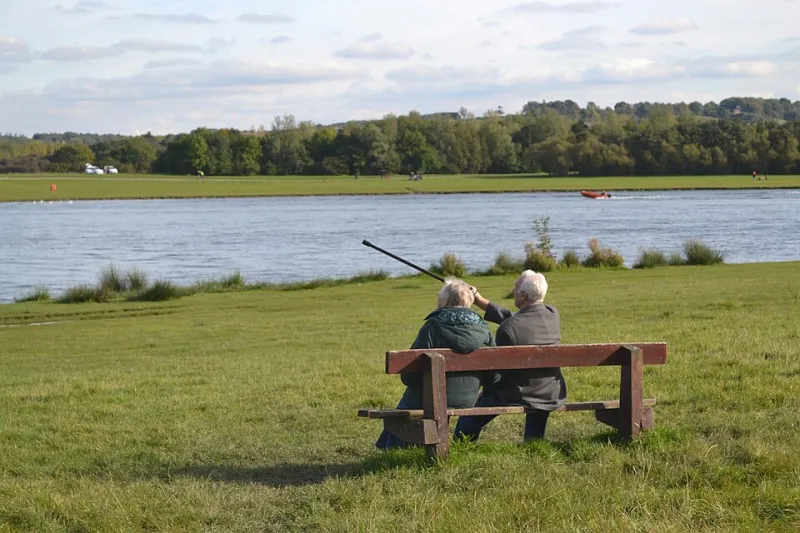
Photo: Neil Theasby , CC BY-SA 2.0, via Wikimedia Commons
Few people who move abroad in their sixties or seventies do so with the intention of coming back. The house is bought, the residency card is issued, the routine settles into shape. And yet the Overseas Living reader who writes to us most often is not the one planning a return, but the one who suddenly needs one: a change in health, the loss of a partner, a grandchild born in Yorkshire, or simply the recognition that the town that suited at sixty-five asks more of them at eighty.
None of that is a reason to distrust the move. It is a reason to keep a written plan in the drawer — the same sort of prudence as making a will, or keeping the boiler serviced. What follows is how to build one.
Why a return plan is not disloyalty
There is a tendency among expatriates to treat any thought of Britain as a small betrayal of the life they chose. That is a mistake. A contingency plan is not a prediction; it is a document that allows you to stay put with a clearer head, because you know the exit is not a cliff edge. Couples should write it together, and should say plainly which of them would be more inclined to return and under what circumstances.
It is worth remembering, too, that the plan has a use even if it is never acted on. It forces you to keep the practicalities — the National Insurance number, the medical records, the UK bank account — in good order, which makes everything else abroad easier as well.
The good news for British nationals is that the right to return is unconditional. No visa is required, no minimum period of absence disqualifies you, and no permission is needed from anyone. What costs money and time is not the legal right but the rebuilding of a life around it.
What re-establishing a household actually costs
Budget for the first six months rather than the first month. In practice that means temporary accommodation while you search, a rental deposit of five weeks' rent and a month in advance, removals or the cost of replacing furniture you decided not to ship, and the small relentless purchases — bedding, a kettle, a vacuum cleaner — that add up to far more than people expect.
Landlords in the British rental market of 2026 are cautious. Many will ask for employer or pension references, proof of savings, and sometimes a UK-based guarantor. An expatriate arriving with an overseas address and no British rental history can find this difficult, and it is one of the strongest arguments for starting the search early, by telephone and email, rather than arriving hopeful. A relocation agent, expensive as they are, can be worth their fee in exactly this situation.
It is also worth checking the current cost of the area you left. Readers are frequently shocked by how much rents have moved in a town they last knew a decade ago. Expect to pay for a season of temporary living while you reacquaint yourself.
Housing: rent first, decide later
The wisest pattern, and the one we hear recommended most often by those who have done it, is to rent for a year before considering a purchase. Renting gives you the chance to discover whether the town still suits, whether the winters feel as you remembered, and whether being close to family is the comfort you imagined or a source of strain. Buying in haste on return is a common and expensive error.
A winter trial of eight to twelve weeks, taken deliberately while you still have a home abroad to go back to, is the single best test available. It is also the point at which many couples discover that they wanted the option of returning far more than they wanted the return itself.
Healthcare: what you can and cannot assume
Access to the NHS rests on being ordinarily resident in the United Kingdom, not on any waiting period. A returning British national who intends to live here is entitled to treatment from the day of arrival, and can register with a GP practice using proof of address. If your NHS number has been mislaid, it can usually be traced through the local surgery or NHS services.
What does need preparing is the paperwork. Ask your doctor abroad for a summary of your medical history, a list of current repeat medicines with doses, and any recent test results, ideally in English. Bring them in print. A gap in your medication is the most common avoidable difficulty in the first fortnight.
Two cautions. First, a Global Health Insurance Card covers travel, not residence, and is no substitute for registration. Second, private policies held abroad almost never transfer, so any cover you rely on in the UK will need to be arranged afresh — and pre-existing conditions will be assessed on their merits.
Pensions, benefits and the tax file
Your State Pension is based on your National Insurance record and is unaffected by years abroad, although the annual uprating may have been frozen while you lived in certain countries. Once you are resident in the UK again, uprating resumes; tell the International Pension Centre promptly so the change is recorded.
Means-tested support is a different matter. Pension Credit, Housing Benefit and Universal Credit all involve a habitual residence assessment, and disability benefits such as Attendance Allowance carry presence conditions. Rules in this area are detailed and change, so take advice from Citizens Advice or an independent financial adviser before you move rather than after.
On the administrative side, keep a single folder — physical or digital — containing your National Insurance number, pension statements, UK bank details, and the contact for HMRC so you can notify them of your return. Registering on the electoral roll and reopening a UK current account will help rebuild the credit file that quietly lapsed while you were away.
The part nobody puts in the spreadsheet
Returning is rarely a neutral act. Friendships abroad may thin once you leave, and friendships at home have moved on in your absence. Some readers describe a period of about a year before the return feels real. It helps to say to family, in advance, what kind of support you are hoping for and what you are not — closer proximity can strain relationships as easily as mend them.
A plan of one page
Write down: the circumstances that would trigger a return; the town you would go to and why; a six-month budget; where you would stay for the first month; the names and numbers of two letting agents; your GP and NHS number; your pension contacts; and the person who would help you make the decision if you could not make it alone. Review it each year, and again whenever health or family circumstances change.
A plan of that sort costs an afternoon. It is the cheapest insurance you will ever take out on a life abroad.