Finding Your Table: Building a Circle of Friends in a Foreign Town After Sixty
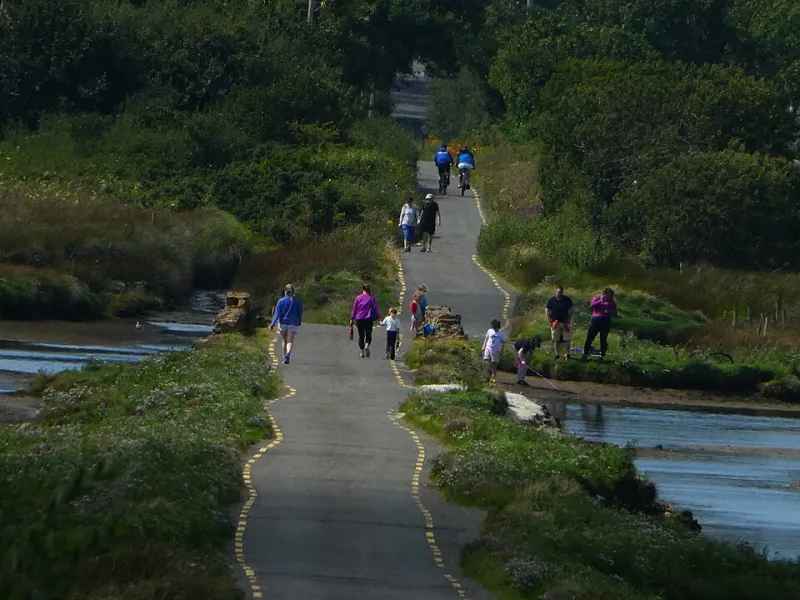
Photo: Maoileann, CC BY-SA 4.0, via Wikimedia Commons
Ask a hundred British couples who moved abroad in their sixties what surprised them most, and the answers will cluster around three things: the cost of building work, the difficulty of the language and the silence of the first winter. The first two are discussed openly. The third is not, and it is the one that sends people home.
A risk that does not appear in the budget
The weeks after the boxes are unpacked are deceptively busy. There are registrations to chase, a kitchen to assemble, a car to insure. Then, somewhere in the second or third month, the diary empties. The neighbours are friendly but not yet friends; the local Britons you met at the estate agent's office have their own routines; and the evenings are long.
This is normal, and it is not a verdict on you or on the town. It is simply what happens when a lifetime of accumulated connections is left behind and has to be rebuilt from nothing, at an age when most people's social circle is settled and no longer looking for additions.
The remedy is rarely romantic. It is structural.
Routine before friendship
Friendship grows out of repetition. The single most useful thing a new arrival can do is to attach themselves to a weekly fixture: a market on Tuesday, a class on Thursday, a walk on Sunday. Turn up often enough and you stop being a stranger; turn up often enough and other people start saving you a seat.
Choose two fixtures rather than six. Extroverts who join everything in the first month tend to burn out by the third, and a fixture you abandon is worse than one you never took up.
The language café is not really about grammar
Almost every town of any size in Spain, Portugal, France and Italy now hosts a conversation exchange, often run by the library, the cultural centre or a local association. The stated purpose is language practice. The actual purpose, for anyone over sixty, is to sit at a table with people who are also slightly out of their depth.
Go even if your grammar is poor. Go especially if it is poor. The person opposite you is there for the same reason, and mutual clumsiness is a faster route to affection than fluency will ever be. Take a notebook, learn the twenty phrases that let you be polite, and accept that you will be corrected.
Walking, swimming and the gentle sports
Walking groups are the most underrated social institution in southern Europe. They are cheap, they are daytime, they attract people of retirement age, and conversation happens naturally alongside the walking rather than being forced across a table. Look for the local ramblers' association, the municipal sports centre or the parish noticeboard.
The same applies to swimming, bowls, pétanque and the gentler forms of cycling. Any activity with a fixed time and a shared mild discomfort will produce conversation.
Volunteering: the quickest way to be needed
Nothing converts an outsider into a local as quickly as being useful. Animal shelters, food banks, charity shops, English-language conversation classes in the local school, hospital reading schemes: all of them need reliable adults with time and patience, which is precisely what a newly retired person has in abundance.
Volunteering also answers a question that quietly troubles many movers: whether they are merely living somewhere or actually part of it. Being expected on a Tuesday morning is a powerful antidote to that doubt.
Expat associations, and their limits
The British and international associations in most expatriate towns are warmly run and genuinely useful, particularly in the first year. They know which dentist speaks English, which builder turns up and which office to avoid on a Monday. Use them. Attend the coffee mornings.
But treat them as scaffolding rather than as the building itself. A social life that consists entirely of fellow Britons can leave you living in a small English village with better weather, and it offers little resilience if that particular circle thins out as people return home or fall ill.
Aim for a mixture: some British company for ease, some local company for belonging, and at least one activity where nobody speaks English at all.
Friendly is not the same as reliable
New arrivals are often overwhelmed by invitations in the first months, and it is easy to mistake enthusiasm for intimacy. The couple who invite you to dinner in week two may be warm and generous and also entirely temporary.
Judge people by different measures. Who remembers the date of your hospital appointment? Who offers to drive you to the airport at six in the morning? Who tells you honestly that a builder's quote is too high? Those are the marks of support rather than sociability, and they take a year or more to appear.
Give the same in return. The most reliable way to be befriended in a foreign town is to be the person who offers first.
The three-month test
If a new town still feels empty after three months of consistent, weekly attendance at two or three fixtures, that is information worth having. It may be the wrong town, the wrong activities or simply a season of life that needs a different approach. It is not a reason to panic, and it is certainly not a reason to conclude that you have failed.
Most people find that the first genuine friend arrives somewhere between the sixth and the twelfth month, usually by accident, usually through a routine they nearly did not bother to keep. The table you are looking for is rarely advertised. It is usually just the one where somebody has already pulled out the chair.