When the Shutters Come Down: Reading a Town in Its Quietest Weeks
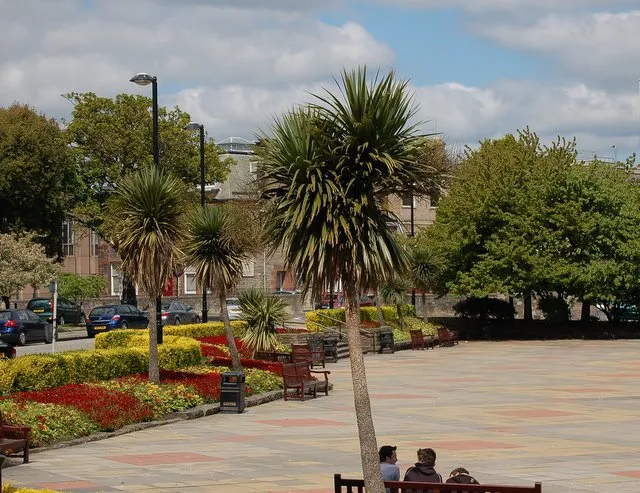
Photo: Paul McIlroy, CC BY-SA 2.0, via Wikimedia Commons
Ask any experienced buyer abroad and they will tell you the same thing: the town they fell in love with in high summer was not quite the town they moved into by November. August is the month when a foreign town shows you its best face and hides its working parts. For anyone planning a move — and particularly for readers in their sixties and seventies who need services to function twelve months a year — that makes it both the most seductive and the least informative time to visit.
It need not be. A holiday month can be read like any other, provided you know what to look for and are prepared to ask a few direct questions.
The Month the Locals Leave
In much of southern Europe, the August exodus runs the opposite way to the British instinct. Whereas a UK seaside town fills up in the school holidays, many Italian, Spanish, French and Greek towns empty of their own residents, who head for the coast or the hills while the visitors arrive. In Italy the peak falls around Ferragosto in mid-August; in France the whole month is treated as a period apart.
What this means in practice is that the butcher, the dentist, the hairdresser and the accountant may all be away at once. A town can look prosperous and convivial while the resident economy is, for four weeks, entirely suspended. That is not a scandal — it is a cultural rhythm, and a pleasant one if you are part of it. But it tells you a great deal about how the place functions the rest of the year.
What a Closed Shutter Actually Says
Walk a street in early August and note which premises are shut. Then note how they are shut. A shop with a printed card giving reopening dates and a telephone number is a business with a routine and a resident owner. A shop with bare metal shutters, no notice and a faded sign may have been closed since the previous autumn.
The distinction matters more than it first appears. A town whose centre is genuinely sustained by residents will keep a bakery, a small grocer, a newsagent and a pharmacy trading through the quiet weeks, however reduced their hours. A town sustained almost entirely by visitors will not. If every food shop within walking distance is dark in August and again in February, you are looking at a resort rather than a community — which is perfectly agreeable for a fortnight and considerably less so for a decade.
Testing the Services You Will Actually Need
Holiday-makers test restaurants and beaches. Residents test clinics, pharmacies and buses. August is an excellent month for the second sort of examination, precisely because the strain shows.
Begin with the pharmacy. Most European countries operate a rota system for out-of-hours cover, with the nearest open pharmacy posted on the door of the closed one. Ask at the counter which pharmacy serves the town in the evenings and at weekends, and how far away it is. If the answer involves a drive of forty minutes on unlit roads, that is worth knowing before you commit.
Then the health centre. Ask whether the local doctor's surgery closes entirely for the holiday period and, if so, who covers it. Ask whether appointments are made by telephone, online or in person — many rural practices still expect you to queue at eight in the morning, which is manageable at fifty and rather less so at seventy-five.
Then transport. Timetables printed in August are usually the summer version, with extra coastal services and cheerful frequency. Ask specifically for the winter timetable, or photograph the notice board and compare. A bus every twenty minutes in August can become three a day in January.
Heat as a Practical Matter
August also allows you to test the house rather than the town. A property without shutters, cross-ventilation or air conditioning can be genuinely uncomfortable in the middle of the afternoon, and for older residents the health implications of sustained heat are not trivial.
Spend an hour in the property at three in the afternoon with the windows as the owner would leave them. Note which rooms hold the heat, whether the bedrooms cool overnight, and how far you would have to walk in full sun to reach a shop, a pharmacy or a bench in the shade. Pavements, kerbs and gradients that feel charming at nine in the morning can be an obstacle course by midday.
The People Who Stay
One of the more useful things to do in August is to identify who has not gone away. The bar that stays open for the handful of residents, the newsagent who opens at seven regardless, the retired neighbour watering plants on a balcony at dusk — these are the people who will still be there in February.
If you are considering a purchase, and you have the opportunity to speak to them, ask what the town is like in the depths of winter: how many properties stand empty, whether the social life continues, whether the water pressure holds in a hard frost, how often the power fails. Their answers will be worth more than any agent's particulars.
Questions to Ask Before You Are Swayed
Four questions are worth putting to any estate agent, in writing if possible. How many of the surrounding properties are occupied by residents rather than let to visitors? Which shops and services trade through the whole year? What happens to the local bus service outside the season? And what proportion of the housing stock is empty in January?
A confident agent will answer readily. A hesitant one has told you something too.
A Note on Timing
The point is not to avoid August — it is a lovely month to be abroad, and many readers will first encounter a town then. The point is to treat it as one reading among several. If you can, return in late October or early February, when the visitors have gone and the ordinary week resumes. Very often the second visit decides the matter, and it is the second visit that will be telling you the truth.